
Writing as Ritual, Writing as Reckoning
Baring Your Soul 101

I have said it before and I will say it many times: stories keep us alive.
The first story I can remember penning was a strange little myth about a magical crocodile man in the third grade. The next one of any importance was four years later, when I wrote a short story about two elderly gay men on vacation navigating the fact that one had cancer. Literally, who was that girl? Because that story was deep as hell.
Yet it wasn’t until I entered high school that writing morphed into something more – not just a means of sharing an interesting tale or hot take but a way that I made sense of myself and the world.
I was blessed to have a wonderful English teacher who gave us the option of writing personal reflection essays for every book we read in class that year. I jumped at the opportunity to avoid another boring book report and found myself absorbed in another kind of epic story: MINE.
By the end of that fated year, writing had become an essential existential tool that made me more legible to myself.
Writing was how I processed my first near death experience; describing the flipping of my father’s minivan as the slow twirling of some existential ballerina caught between realms. That same summer I wrote my first diss poem, after all my best friends decided on BEST FRIEND’S DAY NO LESS to oust me from their orbit. I wrote about weird forms of joy and the color orange and grief and the lips of boys I was obsessed with. I wrote a poem about the aneurysm bursting in my grandmother’s brain. Eventually, I would write the speech that was given to my graduating class (and not because I was Valedictorian – far from it).
But the words that I will never forget were ones that my English teacher wrote at the bottom of a creative writing assignment. There on the page was a bright red A+ along with a message that would change me forever: “Kat – YOU ARE A WRITER.”
I love writing because it is my most favorite form of therapy, but also because it has truly never failed me. In the thirty years (!) that I’ve been actively writing, it has become one of my most respected and sacred tools for inspecting my reality.
Yet ironically, I rarely write about writing.
But since Mr. Bingen hath crowned me, I am here to spill the dirt on what I’ve learned from reckoning with the world through the written word. Buckle up, because I don’t give three fucks about grammar and all that boring stuff.
Because if there’s anything that writing has taught me and what I hope this entices you to do, is how to bare your soul so the world can read what’s written on your bones. (The rest will follow.)
Sacred Covenants for Writing Like You’re Dying
You are the hunter and the prey.
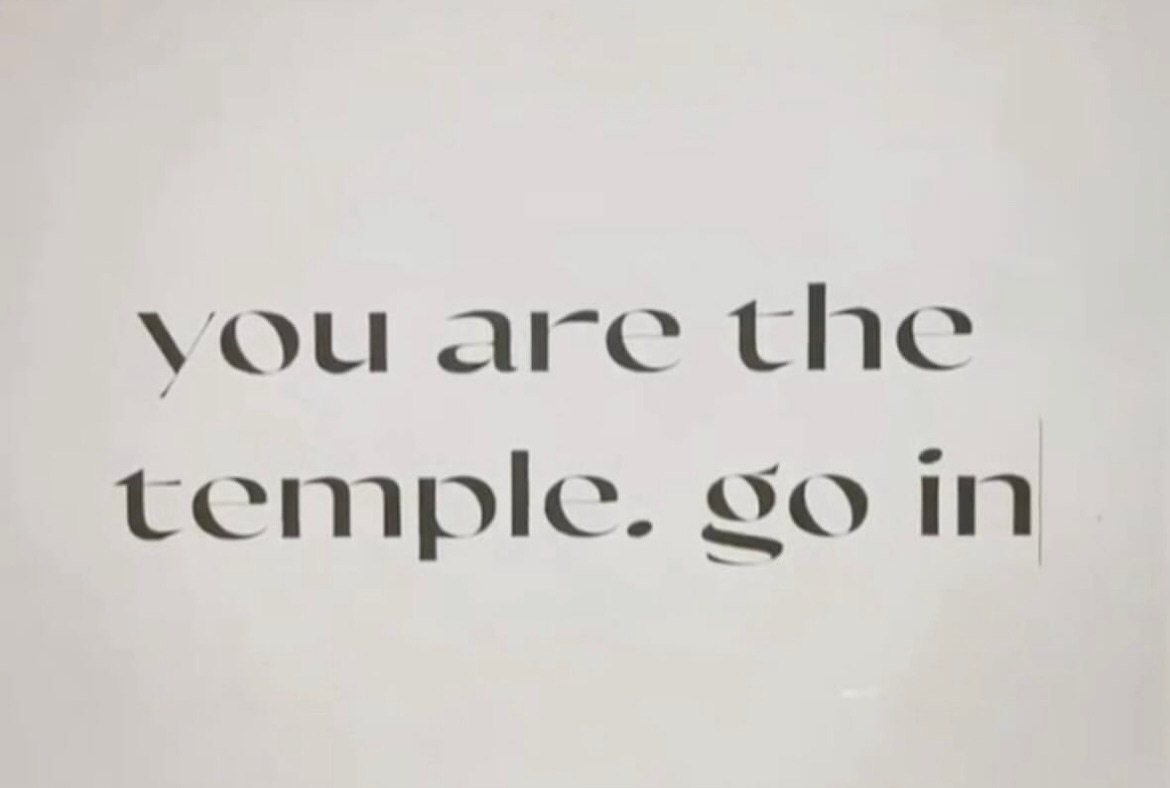
In order to write anything, you must first kneel before the temple of your psyche. Your inner sanctum. Your heart. Wherever the pulse in you exists. You have been called, summoned, beckoned. A scent has arisen. Something in you is seeking an exit – your prey. You can’t see the lure, not exactly, all you know is that something has hooked you and so you must hunt its tracks in the night. Strangely, this is how you develop sight. Writing is the act of stalking – not just seeing. It is a kind of heat vision; a predatory instinct. How you seduce or move towards an energy source. It is only successful if the hunter and the prey (both of them you) collaborate.
You must reveal what you are terrified to see.
Humans are voyeurs. Why else would we entertain ourselves with stories? I don’t know about you, but I like to peer inside the soul of others. So if you’re writing, why are you hiding? Don’t hide. What’s the point? Stop pretending that you are anything but some messy, half-baked, glorious human being. We don’t want perfect, we want to witness your INSANITY. Your wild weirdo musings. The things you would never say out loud. COMMIT THEM TO THE PAGE! Writing is confessional by its nature: an act of exposure. If you aren’t undone, split open, and occasionally horrified by your own honesty, you might ask yourself if you’ve gone far enough. Good writing is bloody. Good writing SHOULD make your spine shiver. Because good writing, when done right, helps you locate the bodies. And the whole point of writing is to reveal what you have, for far too long, buried. Raise the dead. Remove the mask. Write without mercy. Let us behold the actual shadows, the ugly thoughts, the entire truth. Don’t risk your darkness devouring you.
Write like you’re dying and the truth must be told.
Which brings me to….the simple fact that the most magnetic, potent, thirsty writing comes when I tell the truth on myself. If I go into a story and I already know the ending…I’m lying. I’m projecting or pretending, or I just haven’t figured out what exactly I’m protecting (usually my pride). I don’t know why you write, but I write to excavate, to investigate, to have the IMAX experience of Kat, to take myself to the edge of my own understanding and back. But mostly I write to discover where my truth lives and what it looks like. What I know after years of doing so is that truth is prismatic and faceted. There are multiple sides and aspects to any capital T truth. In order to fully behold what lives at the center, where all the lines intersect, you will be taken on a ride. If you don’t yet understand this, give yourself time.
If you desire to know and experience truth, you will learn about lies. You will be forced to confront illusion and delusion. You will be challenged and tested by what you believe. You will become the truth teller as well as the boy screaming wolf. Anything else is a flat narrative (bo-ring), whereas truth has many vectors. If you insist on a one-sided definition, you’re avoiding the real treasure in disguise: the ability to humanize and empathize. You will start to see how two sides can be right without aligning. Sometimes truth is a supervillain in disguise.
There is a red thread. You must grab it.
Inside every story that wants to be told, there is a bolt of lightning. A river of lava. A tectonic fissure. A hot truth that hurts to hold. Your holy task is to find it, hold it, and not let it go. This will feel dangerous because when you touch this red thread, things begin sparking. The story ignites. Sentences take on a life of their own. The threads start weaving themselves. You can’t force this fission – instead you must follow it. Whatever is bubbling under the surface and coming up for air is what needs to be spoken out loud, given form, and held with tenderness. When you find this red thread and tug it, sentences and then situations will start to naturally flow. You will be amazed at what you remember, and how your memory starts to bend around the gravitational pull of this unifying force. Trust what comes forward.
A story is the bend in the river: the place where the narrative changes direction.
Writer Helen Garner once wrote that she “could see that [her] experiences were forming themselves into the kind of curve that we call a ‘story.’ Story is a chunk of life with a bend in it, and '[she] could see this one coming.” I love this description because the reality is, the most interesting things happen when we can’t predict or anticipate what’s behind the bend. The most compelling stories are the ones that circumvent or debunk our expectations, because it is here that we are forced to confront that within us which must change in order to go on. No one is interested in a story where all the plot points are obvious. A happy ending feels good only when we’ve watched the main character struggle through the muck, get fucked up, and survive. Build your story around the scenes where you walk away different, somehow shifted, and are better for it.
Begin where the middle is.
Don’t know where to start? It’s never at the beginning, even though, yes, that would make sense. But a linear plot line is somewhat trite, no? Unless you’re writing a children’s book, I invite you to begin by hitting that big Red Button™, the one with the nuclear codes. Let it detonate all over. This is the fun part, I promise – because you finally came clean and just said it – bad, good, profane, it doesn’t matter. You took personal responsibility! Then, write around it. Go backwards and forwards. Find the orbit. Give us all the details that live in the blast zone to make sense of why this explosive moment was the culmination. Don’t bury the lede – lead with the thing you need to say, the thing you learned, the thing you walked away with. Then unravel the story around it. So much more satisfying, if you ask me.
If you’ve been here for a minute, you might have noticed that this is a tactic I employ about 99% of the time in my long-form personal essays.
For example:
In At the End of the Universe I begin with: “A beautiful stranger walks into town – and it’s me.” (Every time I read this, I get a thrill, and not just because I love writing about ME. Because it felt dangerous and delicious to really own my main character energy.)
In Witch Initiation I begin with: “Congratulations on your witch hunt! Sang a sister friend in a recent voice note. You are officially notorious.” (Now I’ve piqued your curiosity about WTF is happening that would invite a modern day witch hunt.)
In The IZNEZ I begin with: “In order to live I must die. That is why IZNEZ has arrived.” (I mean….if this doesn’t compel you to find out who the Iznez is and why I gotta die to meet her, then we can’t be friends.)
In How to Take Your Medicine I begin with: “I did not need to go to the promised land. No, I only needed to live in my parent’s basement.” (Still one of my top five opening lines. The tension between going to the promised land and living in my parent’s basement as a form of spiritual encounter really encompasses the extremes I oscillate between in this story.)
Do you grok it now? Go tease us, toy with us, flaunt your red flags – because baby, this is YOUR circus and YOU are the star monkey. Act like it.
Thicken the scenes with sensory ingredients.
It doesn’t matter what happened if we can’t feel it in our bodies. Get into the swamp with me. Feed me the soup. Grow some hair, let me touch it and pluck it. This is basic writing 101. Don’t just TELL me what happened, help me birth it through my own body. When I wrote A Broken Fairytale Births a Royal Daughter, I felt that sacred rage deep in my bones. It consumed me for months. I felt feverish and enraptured. I growled and moaned while writing this piece. I broke a sweat multiple times. I had to take breaks to walk, to thrash, to dance the energy through me. But I didn’t leave those sensations behind – I wove that energy into the words, into the rhythm, into the story. And you know, the funniest thing happened – many people who read it reached out to share that they had experienced somatic eruptions like mine. This told me that I had channeled the truth and left nothing behind.
The expectation is not that you channel Kali Ma into your writing. But that you give us the sensory impacts that make it come alive. Don’t tell me you had a sweaty mustache – describe the moistening. If you’re angry, take me on your rage walk. Find words that feel meaty, that get underneath the edge of something.
You will grab the sword by the blade before you grab it by the hilt.
This is a truth that applies to anything you’re doing – but especially things worth doing. What this means is that you will cut yourself on your own process, your own urgency, your own truth. Don’t let that stop you. The first time I wrote a story that was published, my father told me he died a million times reading it. (Admittedly, it was about a very personal part of his pain.) I’ve had boyfriends confess to me that they are afraid they’ll one day be reduced to a side character in one of my stories (a legit and valid fear, my dear boys!!!!) There are stories living inside me that I still don’t know how to start. Sometimes it feels like I might vomit words, and then just as suddenly the urgency dies. There are still things I have yet to confess to myself. I have folders of quotes, sentences, scribbled notes, drafts that I might never return to. I’ve spent months writing pieces that worked me so deeply I thought I would never be done. I’ve had months of writing like I was dying, and then months of ignoring the page.
Welcome to the art of writing, babe.
Writing is the temple where you meet yourself. And if there’s anything that I wish for you, pilgrim of the page, it’s that you learn how to kneel before the strange god that inhabits you and become its holy mouth.
If you’re interested in embarking on a year-long quest to discover yourself more deeply through writing (or to finally write the thing that’s been living inside of you), the waitlist for Singing the Bones 2026 is now open.
Waitlist closes and the cohort will be announced late November 2025.
Brilliant and inspiring!! Thank you for this <3
I AM the star monkey in my circus! Thank you!